Who are we?
ACCSD is a non-profit, independent civil society organization dedicated to advancing inclusive dialogue, community participation and resilience, and informed development across all geographical areas of activities.We work at the intersection of media, governance, culture, and research to support peaceful civic transitions and amplify the voices of affected populations through innovative, culturally rooted methods.
Our Mission
To foster inclusive and sustainable cultural dialogue, civic engagement, and community-led research in conflict-affected and transitioning societies.
Our Vision
A just, resilient, and culturally vibrant society where public discourse is inclusive, development is equitable, and civic actors lead with knowledge and purpose.
What We Do
ACCSD operates across thematic areas including Governance & Civic Participation, Media & Freedom of Expression, Environmental & Climate Justice, Youth Empowerment & Education, and Cultural Dialogue & Social Cohesion. Through cross-border programming, strategic partnerships, and a hybrid approach, we connect research, storytelling, and grassroots action.
Our Team
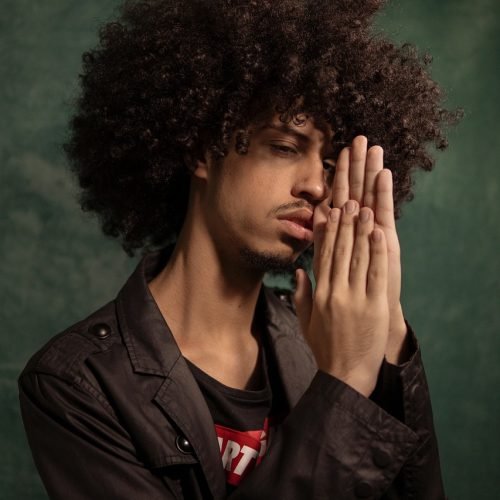
Talal Salih
Head Of Programs

Adil Salih
Executive Director

Muis Alzain
Head Of Programs
Our Story
Before it was ever registered, the heart of the Al Ayyam Centre lived in the pages of Al Ayyam Newspaper, one of Sudan’s most trusted voices for truth and dialogue.
Al Ayyam Centre for Cultural Studies and Development (ACCSD) was officially registered.
It was founded on a simple but powerful belief: that knowledge and dialogue are the true foundations of peace and progress.
As public spaces were closing and conversations fading, a group of Sudanese thinkers, journalists, and civic actors came together.
Their purpose: to create a space that protects dialogue and reconnects communities through shared ideas.
Guided by the life and values of Professor Mahgoub Mohamed Salih, the Centre inherited his unwavering integrity and wisdom.
For seven decades, he embodied the courage and ethics that defined Sudanese journalism.
After Mahgoub’s passing, the Centre became a living continuation of his mission — transforming memory into movement, and principle into practice.
His voice still echoes in every forum, reminding us that journalism must serve the people, not power.
Over the years, the Centre evolved into a bridge between media, academia, and civil society.
It became a place where youth, women, thinkers, and community leaders meet safely to share and rebuild.
Even through war, exile, and uncertainty, the Centre continues its mission — connecting Sudanese voices across borders and preserving the nation’s intellectual and cultural memory.
Today, the Al Ayyam Centre stands as both a tribute and a promise — carrying forward Mahgoub Mohamed Salih’s vision with integrity, empathy, and an enduring belief in dialogue as the highest form of national service.